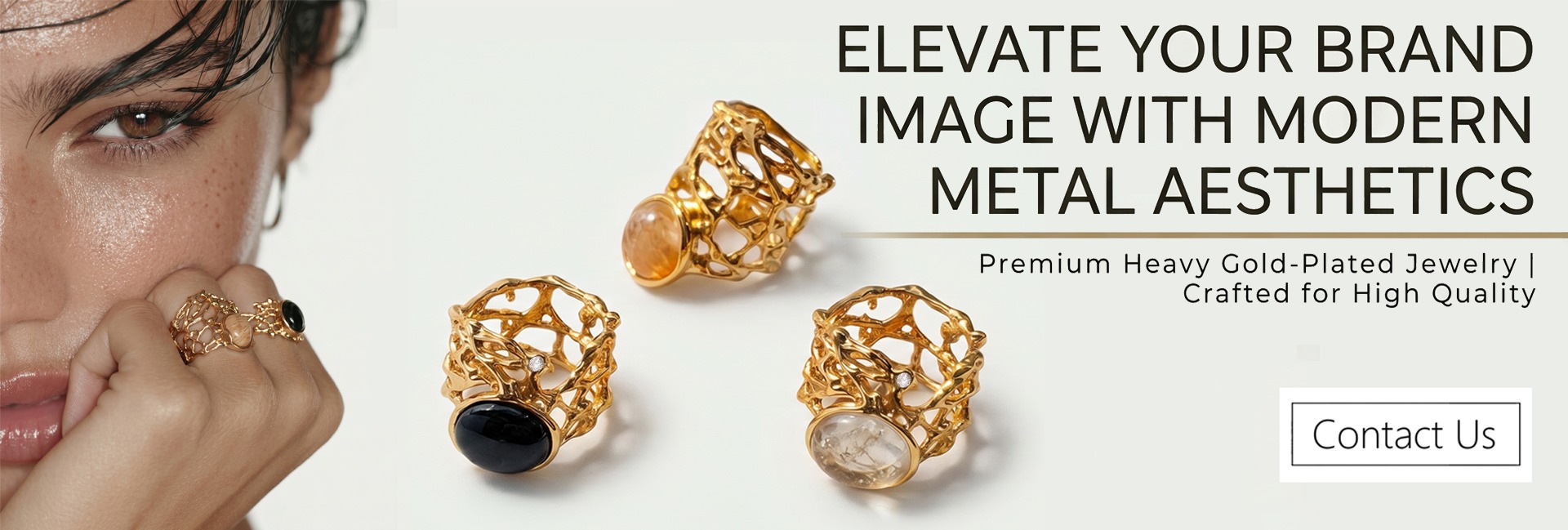
What "Gold Plated" Actually Means
"Gold plated" means a base metal — usually brass, copper, or stainless steel — covered with a thin layer of real gold applied by electroplating. The karat number on the label (14K, 18K) is the purity of that layer, not the whole piece. Karats run on a scale of 24: 24K is pure gold, 18K is 75% gold, and 14K is 58.5% gold, with the remainder made up of alloy metals that add hardness and alter color.
Two numbers describe every plated product: the karat (purity and color of the layer) and the thickness in microns (how much gold is actually on the surface). Both matter, and most marketing only shows you the first one.
How Gold Plating Is Done: The 4-Layer Process
Professional electroplating is a bath process: the piece is cleaned, immersed in a series of charged solutions, and a microscopic layer of gold is deposited electrically onto the surface. Cheap production stops at one or two layers. A serious factory — TEYING uses a 4-layer electroplating process — builds the coating in stages:
- Layer 1: Base/copper coat. Levels the surface and bonds to the base metal.
- Layer 2: Barrier coat. Prevents base-metal reactions and tarnish bleeding through to the surface.
- Layer 3: Color coat. The actual 14K or 18K gold layer that determines color and shine.
- Layer 4: Top/protective coat. A clear protective finish that slows wear at friction points.
The layer count is one reason two "gold plated" necklaces at different price points behave completely differently. Ask for the layer count before you compare prices — and ask about hypoallergenic options. If your audience includes sensitive skin, request nickel-free plating (TEYING offers lead-free, nickel-free, and cadmium-free options with RoHS/REACH compliance), because nickel undercoats are the usual culprit in allergic reactions.
Karat, Purity, and Color
Karat changes color as well as purity. 18K gold is richer and deeper with a warmer yellow; 14K is slightly paler but measurably harder. Both are plated at thicknesses of a few microns, so the hardness difference between them is less visible than the color difference. Rose gold plating is achieved by alloying copper into the gold layer; white-gold looks are created with a rhodium flash over the gold coat (rhodium also has its own plating category for bright, durable white finishes). Gold color is a marketing decision as much as a technical one — but it must be consistent, which is a QC requirement, not a design nicety.
Know Your Labels: Gold Filled, Vermeil, and Solid Gold
Buyers routinely confuse plating with three other product classes, and the labels carry very different costs and durability profiles. Being able to explain the difference is a sales asset for your brand and a negotiating asset with factories.
- Gold plated: a thin gold layer (usually 0.5–5 µm) over a base metal. What this guide covers. Most affordable; lifespan measured in months to a few years.
- Gold filled: a mechanically bonded layer of real gold (typically 5% of total weight, marked 1/20 14K) over brass. Much thicker than plating — roughly 100+ microns of effective coverage — so it wears for years and does not flake. Costs 5–15x a plated equivalent.
- Vermeil: legally defined as 925 sterling silver covered with at least 2.5 microns of gold (10K minimum in the US). A premium bridge product between plated and gold-filled.
- Solid gold: 10K/14K/18K metal throughout. Precious-metal pricing; no coating to wear off, ever.
The 2026 market position to know: "gold plated" sells on price, "gold filled" sells on durability, and "vermeil" sells on premium feel for a silver-based line. If your customers search for "doesn't fade" jewelry, gold filled or PVD will earn better reviews than standard electroplate — and justify a higher price point that covers the cost difference.
The Number That Matters Most: Micron Thickness
Thickness is where durability is actually decided. Standard plating categories:
- Flash plating (~0.1–0.5 µm): a thin gold tint; color fades within weeks of daily wear. Found on the cheapest imports.
- Standard plating (~1 µm): the baseline for most fashion jewelry; 6–12 months of regular wear before visible wear at friction points.
- Medium-heavy (~2–3 µm): the sweet spot for brands that care about reviews; 1–2 years with reasonable care.
- Heavy (~5 µm): premium fashion jewelry standard; 2–3+ years with care, at a noticeable cost premium.
When a quote says "18K gold plated" with no thickness, the correct response is: "How many microns?" A factory that answers in numbers — and can spec a 2–3 µm coat — is a factory you can trust. Our custom jewelry manufacturing guide covers how to negotiate plating specs into your contract.
PVD: The Physical Vapor Deposition Alternative
PVD (physical vapor deposition) deposits gold or colored films in a vacuum chamber at the atomic level, producing a coating that bonds far harder than electroplating. It is the technology behind "fade-resistant" and "waterproof" marketing claims. PVD is dramatically more scratch- and tarnish-resistant than electroplated gold, survives salt water and sweat far better, and offers unique colors (gunmetal, blue, black-gold). The trade-offs: a flatter, less "warm" metallic sheen than electroplated gold, a smaller color palette in classic golds, and higher cost. PVD is the right answer for stainless steel active-wear lines; electroplating remains the right answer for classic gold fashion jewelry.
14K vs 18K vs PVD: Full Comparison
| Factor | 14K gold plating | 18K gold plating | PVD gold |
|---|
| Gold content in layer | 58.5% | 75% | Varies (often ~18K equivalent) |
| Color | Paler, brighter yellow | Richer, deeper yellow | Flatter, slightly cool sheen |
| Scratch resistance | Good (harder alloy) | Good | Excellent — hardest option |
| Typical wear life | 1–2 yrs at 2–3 µm | 1–2 yrs at 2–3 µm | 3–5+ yrs, near-permanent with care |
| Tarnish resistance | Dependent on base + layers | Dependent on base + layers | Very high — resists sweat, salt water |
| Relative cost (plating) | $ (baseline) | $$ (+10–20%) | $$$ (often +40–80%) |
| Best for | Everyday fashion lines, value | Premium fashion, gifting | Waterproof / active / men's lines |
| Hypoallergenic options | Yes, nickel-free on request | Yes, nickel-free on request | Yes — typically nickel-free |
Tarnish Resistance and "Waterproof" Claims
Gold itself does not tarnish — but the metal under the gold layer does, the moment plating wears through at a friction point. That is why layer count and thickness beat karat as durability indicators. Base-metal selection matters too: TEYING offers brass (plated, budget-friendly), 304/316L stainless steel (naturally waterproof, ideal under PVD), and 925 silver (premium).
About "waterproof" claims: no plating is permanent, full stop. Waterproof marketing means the piece tolerates sweat, showers, and swimming far better than standard electroplating — which is true of stainless steel with PVD — but every piece will eventually show wear at clasps and edges. Sell waterproof honestly: "shower, sweat, and swim safe" is a fair claim for PVD on 316L; it is not a fair claim for 1 µm electroplate on brass. The fast route to chargebacks is overclaiming. If you are building a waterproof line, start from our stainless steel jewelry manufacturing guide.
What Costs More and Why
Three variables drive plating cost. First, karat: 18K vs 14K adds roughly 10–20% to the plating line item because the gold content of the coating is higher. Second, thickness: doubling from 1 µm to 2–3 µm roughly doubles gold consumption, and gold is priced daily. Third, technology: PVD vacuum coating requires specialized equipment and slower batch cycles, adding 40–80% over standard electroplating. On a $1 plated earring, plating itself is a small fraction — but on a $5 statement necklace, the difference between flash and 3 µm can be $0.50–1.50 per piece, which is the exact margin most brands are fighting over. Detailed cost context is in our custom jewelry manufacturing cost guide.
Caring for Gold Plated Jewelry
- Remove before swimming, exercising, and sleeping — sweat and friction are the two real killers of plating
- Apply perfume, lotion, and hairspray before putting jewelry on
- Wipe each piece with a soft cloth after wearing to remove oils and moisture
- Store pieces separately (a pouch or compartment per piece) — plated jewelry scratches each other
- Never use abrasive cleaners, polishing cloths meant for solid gold, or ultrasonic baths on plated pieces
- Set customer expectations with a care card in every order — it halves preventable complaints
Testing Plating Quality on a Sample
You can judge plating quality on a production sample in five minutes without any equipment — and you should, because a sample that looks gold under a listing photo and a sample that survives a month of wrist contact are different objects. Run this checklist on every sample before approving bulk:
- Weight and feel: lift the piece and compare against your spec. Suspiciously light metal usually means thinner base material, which is a separate corner from plating.
- Color under daylight: hold the piece next to a known reference (a second sample, a Pantone card, or a store-bought piece in the color you are matching). Check edges, not just the face — edges show the true plating.
- Edges and recesses: look at clasps, ball ends, and inside details with a loupe. Thin plating skips recesses, which is why "the clasp turned silver first" is the most common customer complaint.
- The friction test: rub the clasp and a link edge with a white cotton cloth 20 times. Real plating at 2–3 µm leaves nothing; flash plating can leave a faint gold residue, and the piece will show the wear.
- Ask for the spec in writing: karat, microns, layer count, and base metal on the same document as the sample. You are not approving a sample; you are approving a written standard the bulk order will be measured against.
And ask the factory for test documentation — RoHS and REACH reports, and a nickel-free declaration if you need it. TEYING provides these for all of its plating options (14K/18K gold, rose gold, rhodium, platinum, and PVD), and any serious plating partner should do the same without hesitation.
8 Questions to Ask Your Manufacturer
- What is the base metal, and is it brass, 304/316L stainless, or 925 silver?
- How many electroplating layers does the process use? (Aim for 4 or more)
- What is the gold thickness in microns, and can you spec 2–3 µm or higher?
- Which karat — 14K or 18K — and can you match a Pantone or reference sample of the color?
- Is the plating nickel-free, lead-free, and cadmium-free, with RoHS/REACH test reports?
- What exactly do your "waterproof" claims cover — sweat, showers, swimming?
- How do you control color consistency between sample and bulk batches?
- Do you offer re-plating or rework on defective pieces, and what is the policy?
If a manufacturer answers all eight in writing, you have found a serious plating partner. For category-specific specifications — earrings, necklaces, rings, bracelets — see our custom earrings and custom necklace pages, or the manufacturing FAQ. TEYING has run 4-layer electroplating in Yiwu since 2010 across 500+ brand partner lines; send your design via WhatsApp +86 173 1087 7183 or the quote form below, and ask for a plating spec sheet with your first CAD.